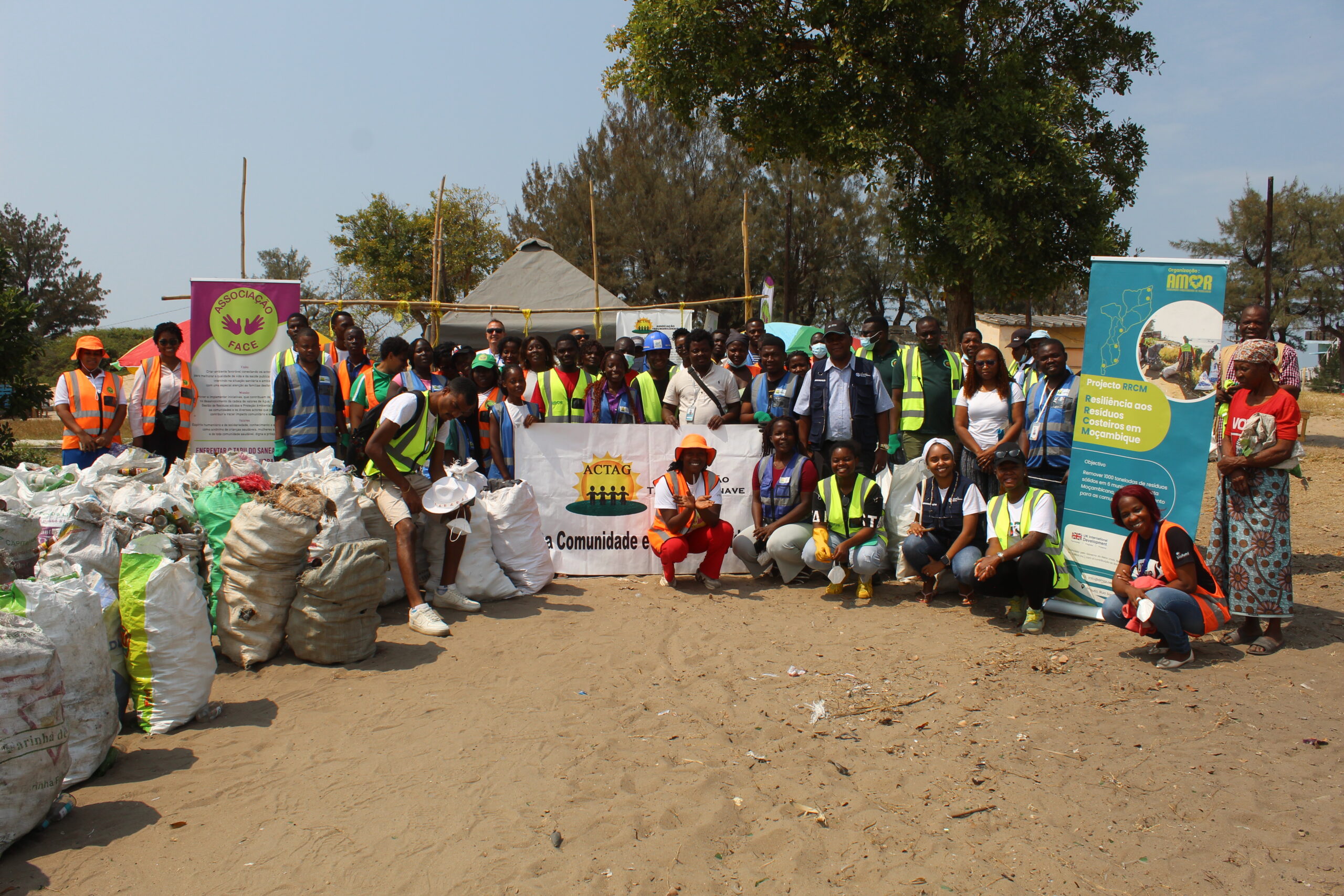
“To protect the ocean, you have to change the system, not just behavior.” The statement is from Sharon Matos, Executive Assistant of the Coastal Waste project in Mozambique (RRCM), implemented by the Mozambican Recycling Association (AMOR). The phrase summarizes the approach advocated by the organization during the 3rd Marine Biodiversity Conference, where the mechanism of Blue Coins was presented, an innovative solution that combines marine conservation, waste management and community inclusion.
The direct link between coastal communities and natural resources makes them protagonists in marine conservation. They are the first to feel the impacts of resource scarcity, and it is also in them that the potential for a lasting transformation lies.
Aware of this central role, the Mozambican Recycling Association (AMOR) presented, during the 3rd Conference of Marine Biodiversity, a systemic and inclusive vision for waste management as a marine conservation tool.
In the panel on “Adoption of Sustainable New Behaviors for the Conservation of Coastal and Marine Biodiversity”, AMOR highlighted the mechanism of Blue Coins, an innovative fund that encourages sustainable practices through the collection of solid waste in coastal areas.
“Conservation of marine biodiversity begins with communities. Blue Coins promote behavior change. We deal with solid waste management and want to improve the quality of life of the communities with whom we work,” said Sharon Matos, Executive Assistant of the Coastal Waste in Mozambique (RRCM) project.
Blue coins are financed by companies and cooperation entities, and financially reward communities for waste collection. The initiative, monitored through the KOLEKT application, transforms environmental depollution into a source of income and contributes to the regeneration of marine ecosystems.
“By valuing waste, Blue Coins offer communities a viable alternative to practices such as cutting mangroves for coal production,” Sharon explained.
In addition to community intervention, AMOR also collaborates with the private sector and government institutions to build a regulatory environment that encourages product and packaging redesign, making them more recyclable and compatible with local waste management systems. This approach reinforces both the circular economy and the indicators of business sustainability.
“Change begins when we create environments that encourage and facilitate sustainable choices. The challenge of marine pollution is not only behavioral, it is also structural and legal,” Sharon said.
AMOR’s participation in the conference reinforces the importance of an integrated approach, involving communities, businesses and policy makers in the joint construction of sustainable, effective and socially just solutions to protect marine biodiversity.